


Preventing Heart Cells from Turning to Bone
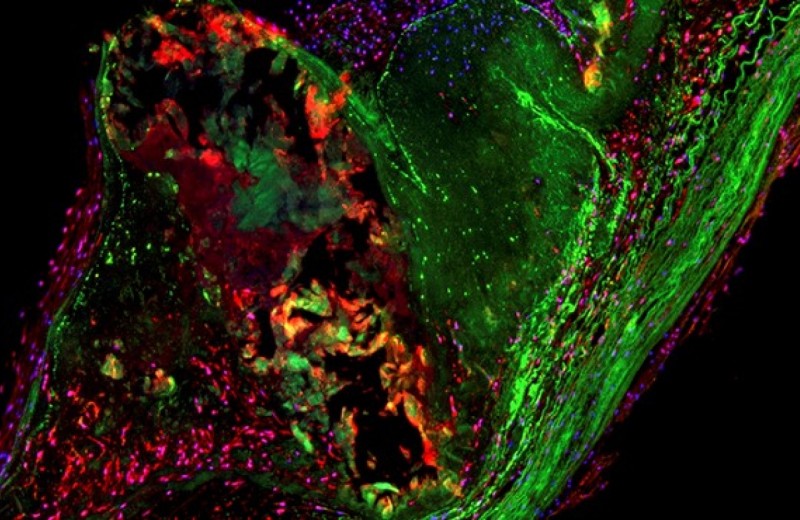
Scientists have discovered why some heart tissue turns into bone, and they may have learned how to stop it.
Srivastava Lab Stem Cells/iPSCsGladstone NOW: The Campaign Join Us on the Journey ✕
1261 - 1275 of 1429 Results Clear All
Scientists have discovered why some heart tissue turns into bone, and they may have learned how to stop it.
Srivastava Lab Stem Cells/iPSCsJeanne Paz, PhD, an assistant investigator at the Gladstone Institutes, has been awarded the prestigious Michael Prize, honoring her significant contributions to the field of epilepsy.
Paz Lab EpilepsyKatherine Pollard uses innovative statistical analyses to shed new light on the connection between gut bacteria, metabolism, and BMI.
Center for Systems and Therapeutics Pollard Lab Big Data MicrobiomeGroundbreaking discovery challenges the conventional theory that infected host cells control latency and could open the door to new pathways.
Weinberger Lab HIV/AIDSRaising levels of the life-extending protein klotho can protect against learning and memory deficits in a mouse model of Alzheimer’s disease, despite the accumulation of Alzheimer-related toxins in the brain.
Mucke Lab Aging Alzheimer’s DiseaseThe first study to manipulate CRISPR genome editing using small molecules has important implications for correcting disease-causing genetic mutations
Cardiovascular Disease Roddenberry Stem Cell Center Ding Lab CRISPR/Gene Editing Stem Cells/iPSCsBy helping cells switch their type, we may have discovered a new way to repair damaged hearts, and potentially revolutionize the future of medicine.
Srivastava Lab Stem Cells/iPSCsKaterina Akassoglou is working to identify a biomarker that could track the progression of multiple sclerosis using blood tests
Akassoglou Lab Multiple SclerosisProtein interactions between viruses and cells can illuminate common weak points in human biology and reveal potential new targets for antiviral treatments.
Krogan Lab Ott LabLeor Weinberger has been elected to the College of Fellows for the American Institute for Medical and Biological Engineering (AIMBE) for his research on novel therapeutic strategies to fight viral infections.
Awards Infectious Disease Weinberger LabPre-exposure prophylaxis, or PrEP, may be the key to helping San Francisco become the first city to stop HIV.
HIV/AIDS Grant LabAt the Gladstone Institute of Neurological Disease, two distinguished scientists are exploring Parkinson’s disease from all angles—gaining critical insights about the condition.
Kreitzer Lab Nakamura Lab OptogeneticsLoss of hearing is linked to a decrease in a critical cellular protein, and elevating the activity of this protein could prevent noise-induced hearing loss, as well as potentially benefiting a host of other aging-related conditions.
Infectious Disease AgingRecent discoveries made at the Gladstone Institutes have provided new hope in the search for a cure for HIV/AIDS.
HIV/AIDS Greene LabAdvances made in the fields of virology and immunology often spread from one disease to another.
Ott Lab Diabetes Hepatitis C HIV/AIDS