


Reasons to Be Hopeful

New findings about Alzheimer’s disease advance the search for more effective treatments.
Alzheimer’s Disease Mucke LabGladstone NOW: The Campaign Join Us on the Journey ✕
31 - 44 of 44 Results Clear All
New findings about Alzheimer’s disease advance the search for more effective treatments.
Alzheimer’s Disease Mucke LabResearchers from the Gladstone Institutes have shown for the first time that the protein BRCA1 is required for normal learning and memory and is depleted by Alzheimer’s disease.
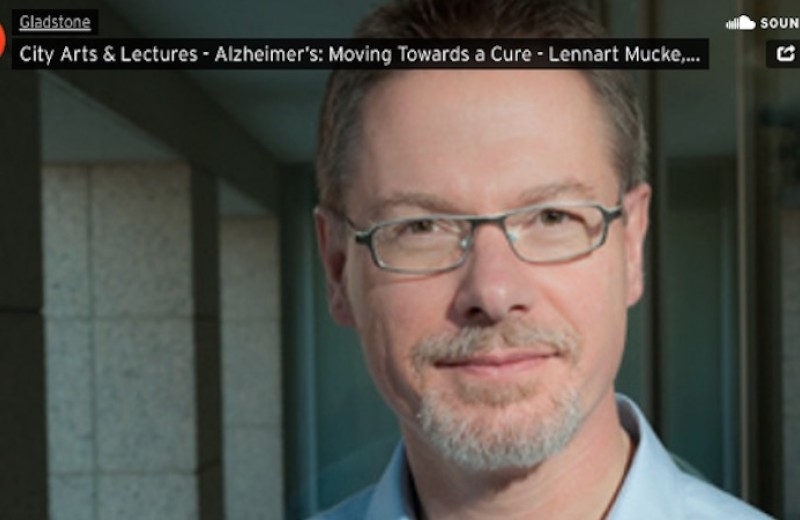
Mucke Lab Alzheimer’s DiseaseHear Lennart Mucke, MD, Director of the Gladstone Institute of Neurological Disease, discuss progress towards Alzheimer’s cures during his recent City Arts & Lectures appearance.
Mucke Lab Alzheimer’s DiseaseRaising levels of the life-extending protein klotho can protect against learning and memory deficits in a mouse model of Alzheimer’s disease, despite the accumulation of Alzheimer-related toxins in the brain.
Mucke Lab Aging Alzheimer’s DiseaseSAN FRANCISCO, CA—Researchers at the Gladstone Institutes have shown that reducing brain levels of the protein tau effectively blocks the development of disease in a mouse model of Dravet syndrome, a severe intractable form of childhood epilepsy.
Epilepsy Mucke LabA joint Gladstone-UCSF study reveals a gene linked to longevity also improves learning and memory. This discovery opens a new path for treating Alzheimer's and other aging-related diseases.
Research (Publication) Alzheimer’s Disease Mucke Lab AgingSAN FRANCISCO, CA—Lennart Mucke, MD, who directs neurological research at the Gladstone Institutes, next week will receive the ARCS Foundation’s 2013 Pacesetter Award for his lifelong dedication to overcoming Alzheimer’s disease—and for mentoring students to take a similar approach.
Mucke Lab Neurological Disease Alzheimer’s DiseaseSAN FRANCISCO, CA—Lennart Mucke, MD, who directs neurological research at the Gladstone Institutes, today received the MetLife Foundation’s 2013 Award for Medical Research in Alzheimer’s Disease at a scientific briefing and awards ceremony in New York.
Alzheimer’s Disease Mucke LabSAN FRANCISCO, CA—Scientists at the Gladstone Institutes have discovered that a certain type of DNA damage long thought to be particularly detrimental to brain cells can actually be part of a regular, non-harmful process.
Alzheimer’s Disease Mucke LabSAN FRANCISCO, CA—Scientists at the Gladstone Institutes have discovered that an FDA-approved anti-epileptic drug reverses memory loss and alleviates other Alzheimer’s-related impairments in an animal model of the disease.
Alzheimer’s Disease Epilepsy Mucke LabSAN FRANCISCO—July 15, 2012—Lennart Mucke, MD, who directs neurological research at the Gladstone Institutes, has received the Khalid Iqbal Lifetime Achievement Award for his exceptional contributions to Alzheimer's disease research. The Alzheimer's Association presented the award to Dr.
Awards Alzheimer’s Disease Mucke LabSAN FRANCISCO, CA—Scientists at the Gladstone Institute of Neurological Disease (GIND) in San Francisco have discovered a new strategy to prevent memory deficits in a mouse model of Alzheimer's disease.
Alzheimer’s Disease Mucke LabSAN FRANCISCO, CA—Amyloid beta (Αβ) proteins, widely thought to cause Alzheimer's disease, block the transport of vital cargoes inside brain cells.
Alzheimer’s Disease Mucke LabSAN FRANCISCO, CA—Scientists from the Gladstone Institute of Neurological Disease (GIND), UCSF, and Stanford have discovered that a certain type of collagen, collagen VI, protects brain cells against amyloid-beta (Aβ) proteins, which are widely thought to cause Alzheimer's disease.
Alzheimer’s Disease Mucke Lab