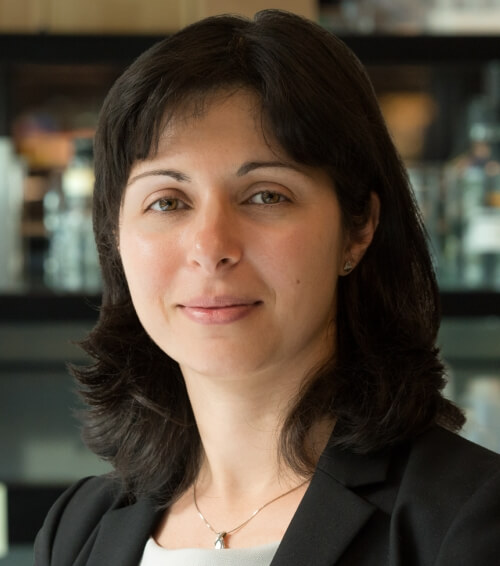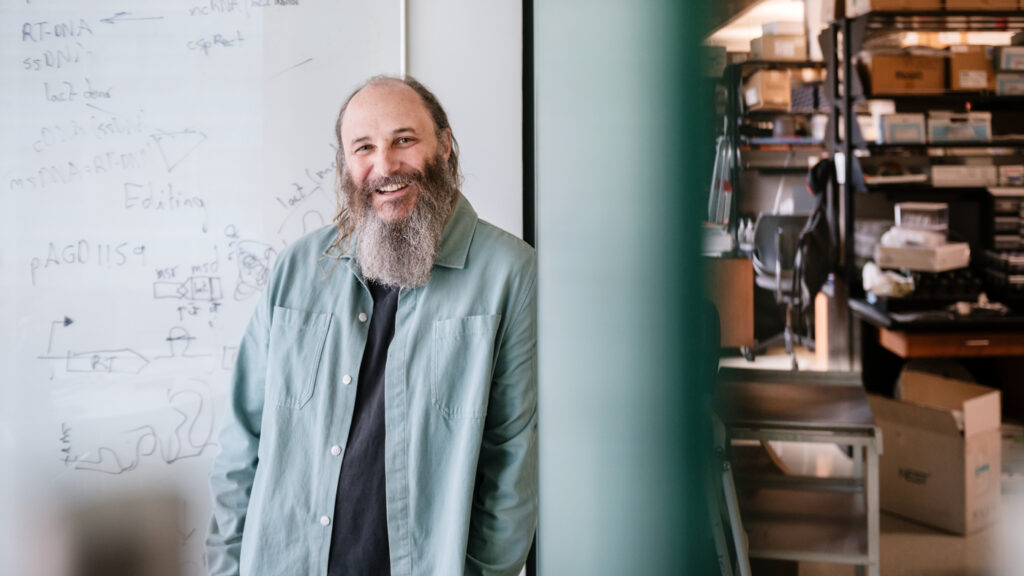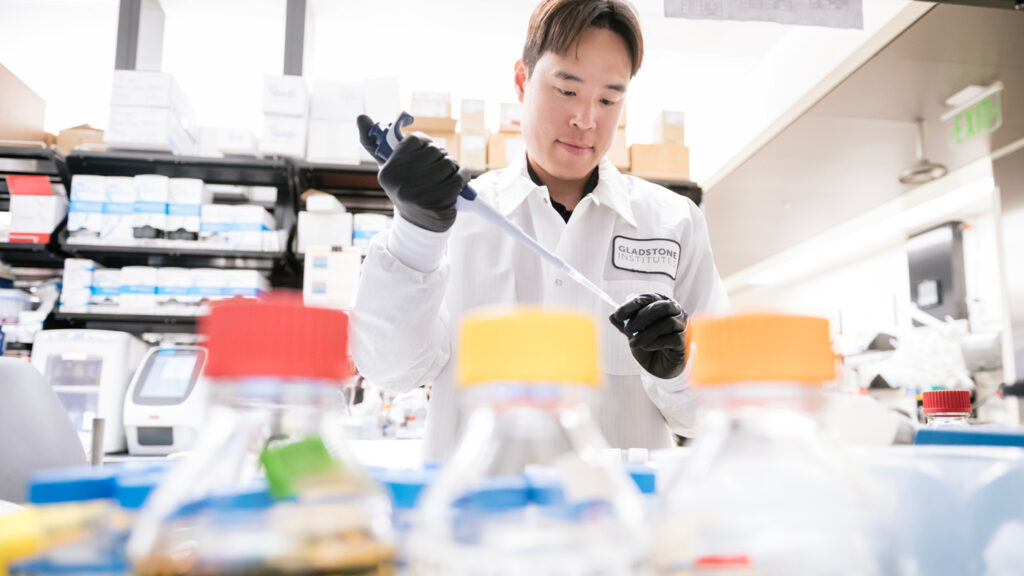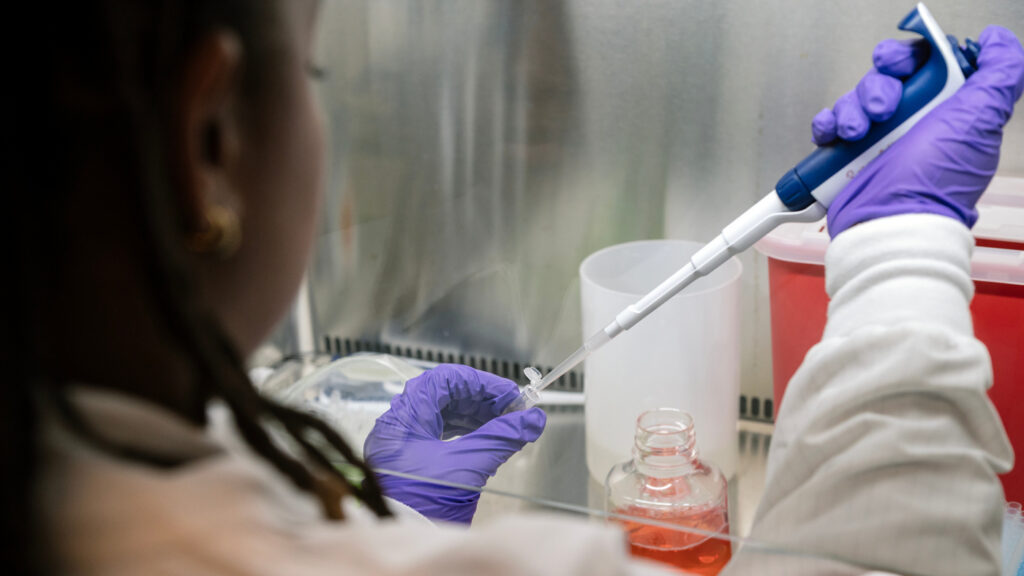
Katie Pollard, PhD portrait image

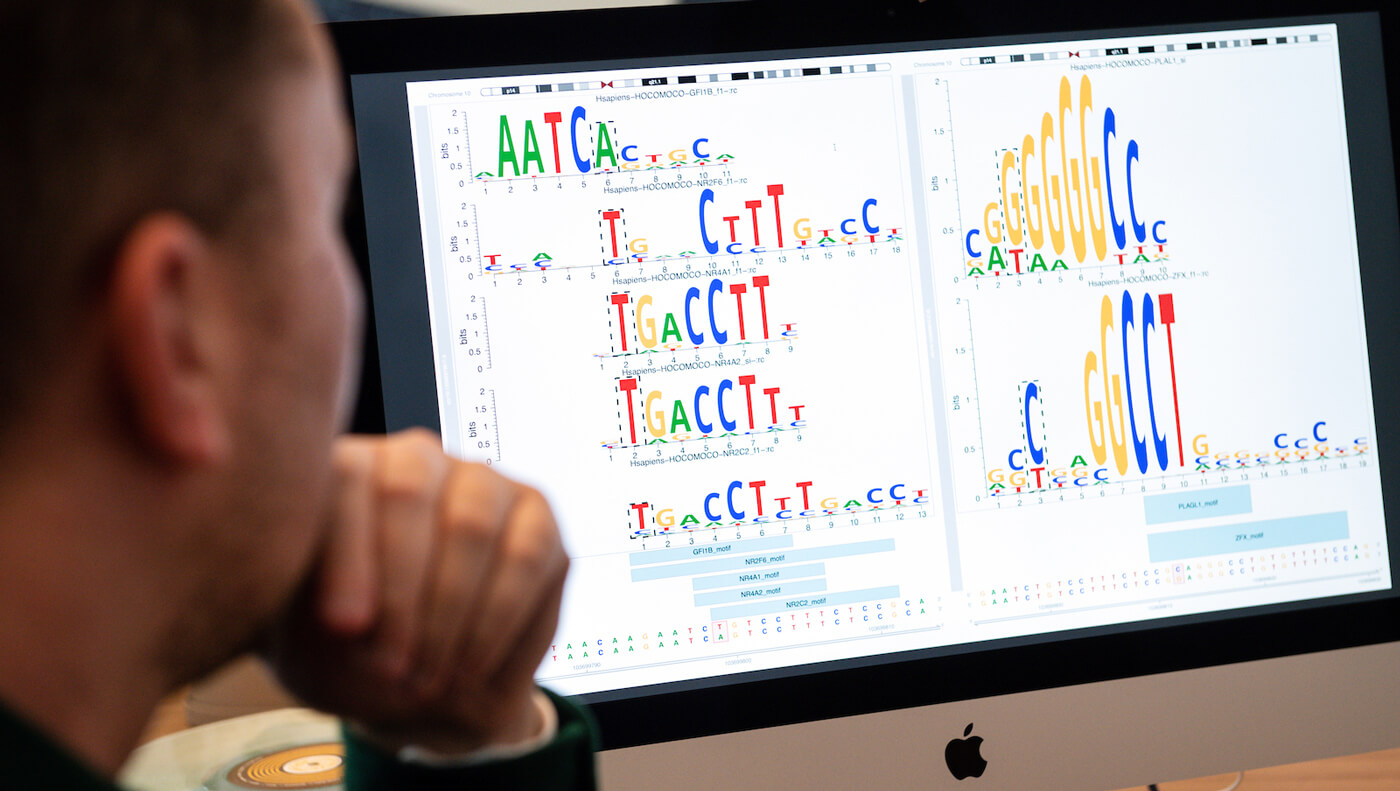
Katie Pollard and her team develop models that enable them to decode how genomes work, evolve, and break in disease.

Their analyses of massive sets of genomic and epigenomic data include investigating human genetic variation, understanding what makes humans unique compared to other species, and characterizing the genomic diversity of the human microbiome, the group of bacteria that populate our digestive system and other body sites. An evolutionary focus, coupled with rigorous statistical methods and bioinformatics tool development, gives the lab a unique perspective on human biology and disease.

Disease Areas

  • Cancer
  • Congenital Heart Defects
  • Genetic Diseases
  • Infectious Diseases
  • Inflammatory Bowel Disease and Other Microbiome-Related Diseases
  • Neurodegenerative Diseases
  • Psychiatric Diseases

Areas of Expertise

  • Bioinformatics
  • Data Science
  • Developmental Biology
  • Epigenetics
  • Genome Evolution
  • Genomics
  • Machine Learning/AI
  • Microbiome
  • Statistics
  • Technology Development

Lab Focus

  • Creating tools for genomic data analysis that combine statistical rigor, an evolutionary perspective, and massive integration of public data.
  • Using AI and other predictive computational models to gain a mechanistic understanding of human biology.
  • Identifying the genetic basis for human traits and diseases.
  • Characterizing the human microbiome through metagenomic data analysis.
  • Designing biomedical research technologies to optimize what we can learn from them.
  • Science communication and education.

Research Impact

Pollard pioneered a statistical approach to identify the fastest-evolving regions of the human genome, known as Human Accelerated Regions (HARs). Her team showed that many of these correspond to non-coding sequences controlling the expression of genes important for development and associated with psychiatric disorders. The lab also used machine learning to reveal the importance of DNA shape and folding in gene regulation. These studies have generated research tools for studying human disease that are yielding novel therapeutic targets.

Pollard has also designed metagenomic-based methods to study the human microbiome at the resolution of individual genes and genetic mutations. From these studies, novel insight will arise into the relationship of the microbiome to health and disease, setting the stage for using metagenomics in precision medicine.

The Pollard Lab’s open-source code for gene expression analysis, detecting evolutionary conservation and acceleration, and quantifying genetic changes in the human microbiome is used in thousands of labs and classrooms.


About

Professional Titles

  • L.K. Whittier Director, Gladstone Institute of Data Science and Biotechnology
  • Senior Investigator, Gladstone Institutes
  • Professor, Department of Epidemiology and Biostatistics, UC San Francisco
  • Director, Biomedical Informatics Graduate Program, UC San Francisco
  • Investigator, Chan Zuckerberg Biohub San Francisco

Bio

Computational biology, which empowers scientists to draw new insights from massive amounts of data, is Katie Pollard’s métier. She earned her PhD in biostatistics at UC Berkeley, then completed a postdoctoral fellowship at UC Santa Cruz, where she worked with David Haussler, the renowned bioinformatician who led the team that assembled the first human genome sequence. During her fellowship, Pollard discovered rapidly evolving regions in the human genome that may help explain the emergence of brain capabilities unique to humans and may also point to their vulnerability to neurological diseases. After serving as an assistant professor at UC Davis, Pollard joined Gladstone in 2008. She was appointed founding director of the Gladstone Institute of Biotechnology and Data Science in 2018.

In her work, Pollard designs computer programs that can test a million or more hypothetical experiments in a day to predict outcomes. This approach helps identify and prioritize which research avenues performed in a lab are most likely to lead to success, increasing efficiency and speeding discovery.

Her team is recognized for both its rigor to the field of genomics and for its generosity: the open-source software they create is readily shared with scientists around the world. Pollard herself is a dedicated mentor who takes pride in equipping women and other underrepresented groups in science with the skills and training to launch successful careers—and encourages them to extend the practice to the next generation.

Pollard also lends her expertise as an advisor to research programs across the country, including those at the Simons Foundation, The Rockefeller University, and Stanford University, and to biotechnology companies such as Phylagen and Tenaya Therapeutics.

Q:

What Are You Most Excited About in Your Lab Right Now?

“It is such a thrill that we can now rapidly screen trillions of causal hypotheses about genetic diseases using AI models built in our lab This pushes us to take risks and enables us to prioritize the experiments that are most likely to yield new discoveries.”

This Is AI Decoding the Genetic Cause of Disease

3:25

Honors and Awards

  • 2023
    Fellow, American Association for the Advancement of Science
  • 2022
    Elected member, National Academy of Medicine
  • 2021
    Fellow, American Institute for Medical and Biological Engineering
  • 2020
    Fellow, International Society for Computational Biology

Publications