


Virology Research Goes Viral
Advances made in the fields of virology and immunology often spread from one disease to another.
Ott Lab Diabetes Hepatitis C HIV/AIDSGladstone NOW: The Campaign Join Us on the Journey ✕
1351 - 1365 of 1505 Results Clear All
Advances made in the fields of virology and immunology often spread from one disease to another.
Ott Lab Diabetes Hepatitis C HIV/AIDSThe postdoctoral fellows will use the grants to pursue research into epigenetics and heart disease, and the role of ketone bodies in aging.
Srivastava Lab AgingNew generation of microbicides should contain compounds that break down amyloid fibrils in semen in order to increase drugs’ effectiveness.
HIV/AIDS Greene LabHonor recognizes researchers and physicians who have made significant contributions to the field of medical science.
Srivastava LabLow levels of the naturally occurring protein progranulin exacerbate cellular and cognitive dysfunction, while raising levels can prevent abnormalities in an Alzheimer model.
Alzheimer’s DiseaseTodd McDevitt will use his background in biomedical engineering to improve and accelerate the development of human tissues from stem cells.
McDevitt Lab Stem Cells/iPSCsGrants are to be used for innovative and transformative research into the detailed cell biology of the brain.
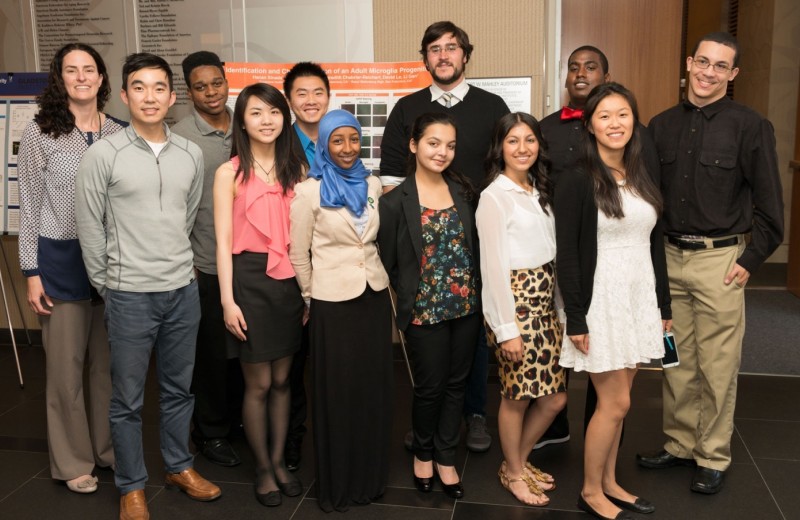
Finkbeiner LabUnderrepresented high school and community college students spent the summer at the Gladstone Institutes conducting hands-on research and learning about what it means to be a scientist.
Student Outreach and Science Education Institutional News DiversitySAN FRANCISCO, CA—Researchers at the Gladstone Institutes and University of California, San Francisco have shown that a loss of cells in the retina is one of the earliest signs of frontotemporal dementia (FTD) in people with a genetic risk for the disorder—even before any changes appear in their behavior.
Neurological Disease Gan LabSAN FRANCISCO, CA—Researchers at the Gladstone Institutes have shown that reducing brain levels of the protein tau effectively blocks the development of disease in a mouse model of Dravet syndrome, a severe intractable form of childhood epilepsy.
Epilepsy Mucke LabSAN FRANCISCO, CA—A new study from the Gladstone Institutes has revealed a way to alleviate the learning and memory deficits caused by apoE4, the most important genetic risk factor for Alzheimer’s disease, improving cognition to normal levels in aged mice.
Huang Lab Alzheimer’s DiseaseWith his unique combination of biology and chemistry, Gladstone’s Sheng Ding is quickly becoming a tour-de-force in the field of regenerative medicine.
Diabetes Ding Lab Stem Cells/iPSCsNew gift from long-time supporter William Younger is helping two top scientists repair damaged hearts and prevent damage in developing ones.
Donor Stories Cardiovascular Disease Bruneau Lab Srivastava Lab Stem Cells/iPSCsA joint Gladstone-UCSF study reveals a gene linked to longevity also improves learning and memory. This discovery opens a new path for treating Alzheimer's and other aging-related diseases.
Research (Publication) Alzheimer’s Disease Mucke Lab AgingSAN FRANCISCO, CA—A team of scientists at the Gladstone Institutes has identified a new way to make latent HIV reveal itself, which could help overcome one of the biggest obstacles to finding a cure for HIV infection.
Weinberger Lab Infectious Disease HIV/AIDS