Gladstone NOW: The Campaign Join Us on the Journey✕




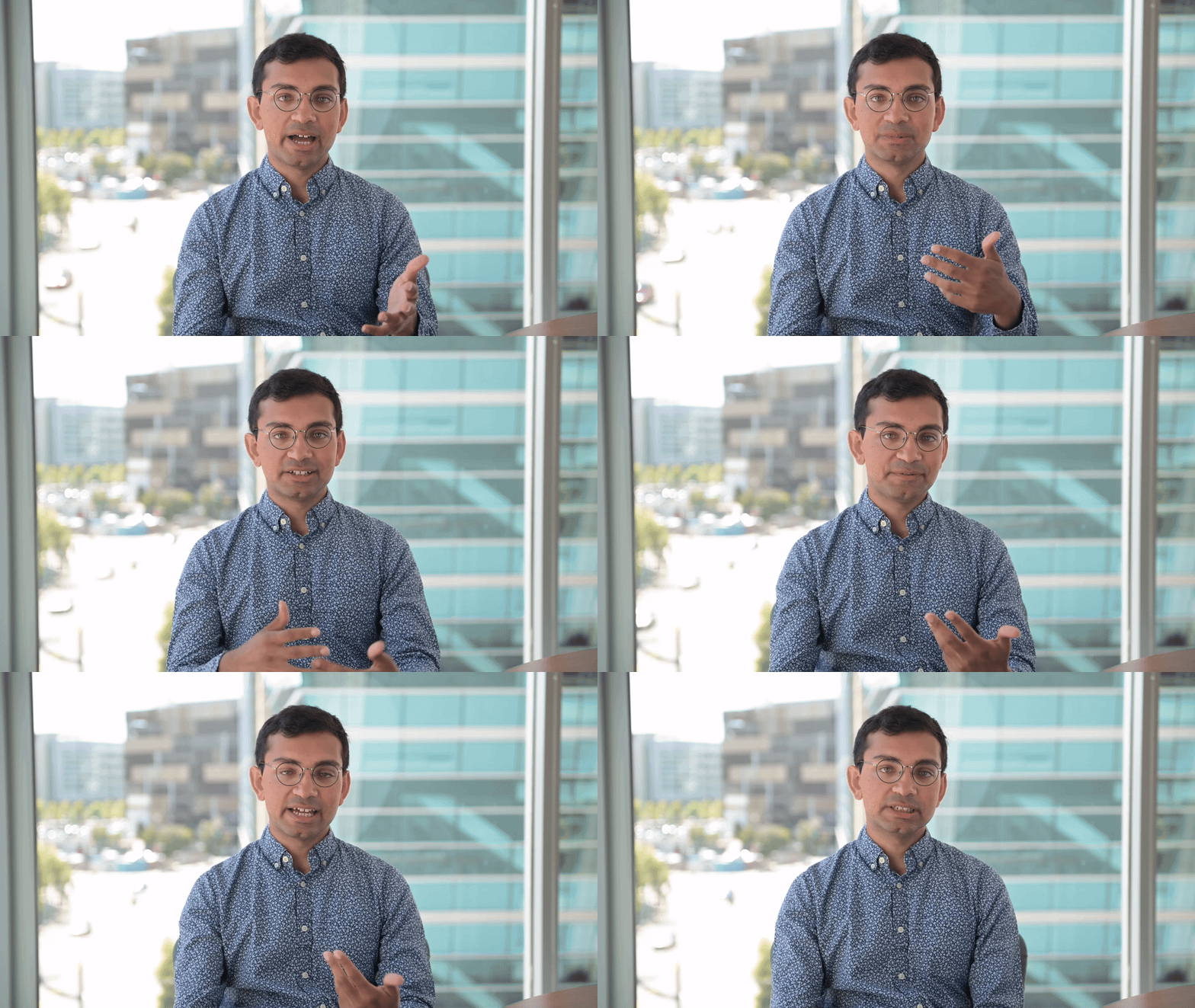
Ayush Midha is uncovering how the body adapts when oxygen runs low—work with surprising ties to cancer and fertility.
Ayush Midha is a MD/PhD student at UC San Francisco (UCSF) and a graduate student researcher in Isha Jain’s lab at Gladstone Institutes. Midha grew up in Sunnyvale, California, and studied developmental biology at Harvard University. Midha’s research focuses on the regulation of metabolism—the processes by which our bodies decide how to use the nutrients we consume.
What brought you to Gladstone?
I joined Isha Jain’s lab at Gladstone because I was fascinated by the idea that oxygen is a nutrient like any other: we need it to survive, but too much or too little can be toxic. Before I joined, Isha and I had a brief conversation where she described some of the unexpected things that happen to the metabolism of mice and humans when oxygen runs low. I was sold on spending my PhD investigating these phenomena.
What do you like about Gladstone?
People at Gladstone take big questions seriously. There’s a willingness to chase surprising results and challenge established frameworks. I love that this attitude is pervasive across fields and technologies here. I can easily walk down the hall or go up a floor and find someone tackling important, unanswered questions.
Beyond the scientific environment, I love the community at Gladstone. I’ve met some of my best friends at Gladstone, and we don’t even work on the same floor!
What are the key areas of research you’re focused on?
Humans consume food and oxygen to produce energy, just like a campfire requires wood and air to burn. I study how we adapt our metabolism when oxygen is scarce, a state called hypoxia.
It turns out that a lot of our cells are remarkably flexible; they can reprogram their internal chemistry to produce energy while consuming less oxygen. Along these lines, we’ve uncovered one metabolic process that functions as a “backup” when the normal machinery gets backed up, a bit like the fermentation that microbes do to make alcohol or kombucha. Understanding the architecture of these backup systems tells us how cells survive when things go wrong.
Another surprising thing we’ve found is that lowering oxygen levels across the whole body can actually slow down tumor growth. Cancer cells need to activate a lot of energetically demanding processes to build new cells and grow, and some of these processes are disrupted when oxygen runs low. We think this might contribute to the observation that higher-altitude counties in the US tend to have lower mortality rates from cancer.
How does your research contribute to understanding or treating specific diseases?
Altered metabolism drives a lot of diseases, even beyond conditions like diabetes or heart disease. For example, our lab has identified a metabolic pathway that is activated in low-oxygen settings and seems to be important for sperm motility, which is energetically very demanding. Activating this pathway could help treat infertility, and suppressing it could serve as contraception.
Cancer is also a metabolic disease. Instead of using nutrients to fulfill their normal functions, cancer cells divert those energetic resources toward growing and building new cells. We think that lowering oxygen levels across the whole body can short-circuit the tumor’s energy production and slow its growth.
Can you provide an example of a successful collaboration that led to significant findings or advancements?
Our work on tumor metabolism in low-oxygen settings comes out of a remarkably productive collaboration with the Goodarzi Lab at UCSF and Arc Institute. We brought our expertise in measuring metabolism across biological systems; they brought theirs in cancer models and computational analysis. Combining the two let us work out how lowering oxygen keeps tumors from channeling nutrients into the rapid growth they depend on.
Who or what has been your biggest influence in your scientific career?
My first scientific mentor was my grandfather, who was a physicist in India. When I was a kid, my grandparents would spend their summers with me here in the San Francisco Bay Area, and my grandfather always encouraged me to be inquisitive. In high school, I would call him for help with my chemistry and physics homework, and I could always sense his excitement.
By the time I was in college, I knew I wanted to join a research lab like him. His scientific journey took him to many jobs around the world, and I have consistently been inspired by his tenacity throughout his career.
We had a nice full-circle moment a couple years ago. I had been working with our lab’s mass spectrometer—an instrument my grandfather worked with during his scientific training 60 years ago. I got to show him our instrument, and he was surprised by how small it was today!
What do you do when you’re not working?
These days, I’ve been cooking, running, and hanging out with my cat Margot.
My main hobby is watching movies (at the AMC, the Roxie, my couch, and my friends’ apartments). I like all kinds of movies: English or foreign language, action or comedy, new or old. I’ve even gotten into some horror movies recently. Lately, I’ve been trying to engage more with film criticism to better understand the choices that go into filmmaking.
What is your hidden talent?
I’m pretty good at ice skating. I did some figure skating and speed skating for a short time as a kid, and I can still be a little graceful on ice.
What advice would you give to young scientists or students interested in your field?
I would encourage young scientists to seriously engage with the older classics. In the field of metabolism, most vitamins were identified in the early 20th century; insulin was discovered in 1921; the Krebs cycle was worked out in 1937; and the process by which mitochondria function as powerhouses of the cell was proposed in 1961. The approaches these scientists took were methodical, elegant, and rigorous, and they made path-breaking discoveries without all the technological marvels we have today.
Beyond these seminal works, I’ve learned so much by digging through more obscure papers from decades past. Nearly every time I’ve felt stuck during a project, going back to the early literature has helped me break out of the rut.
Meet Gladstone: Lexi Schneider
Article
August 24, 2026
Meet Gladstone: Lexi Schneider
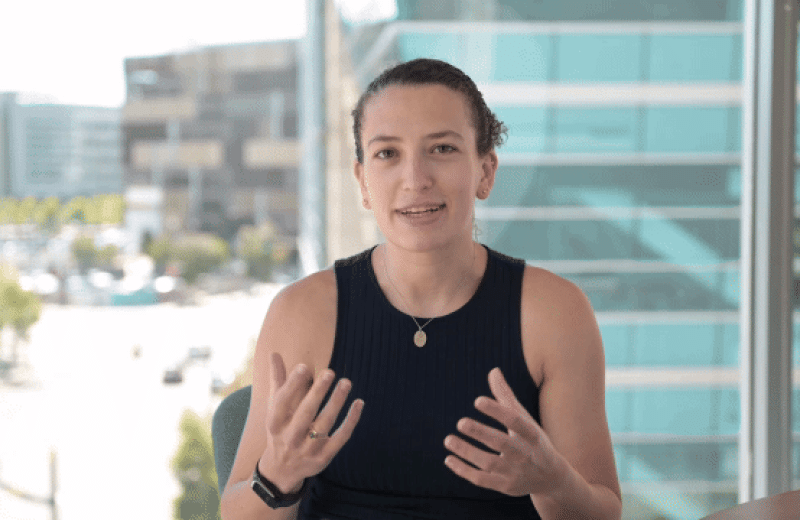
Meet Lexi Schneider, a PhD student using innovative technology to better understand the blood brain barrier.
Profile Graduate Students and Postdocs Yang LabAn Ancient Genetic Twist and Its Modern Impact on Brain Disease
Article
July 14, 2026
An Ancient Genetic Twist and Its Modern Impact on Brain Disease
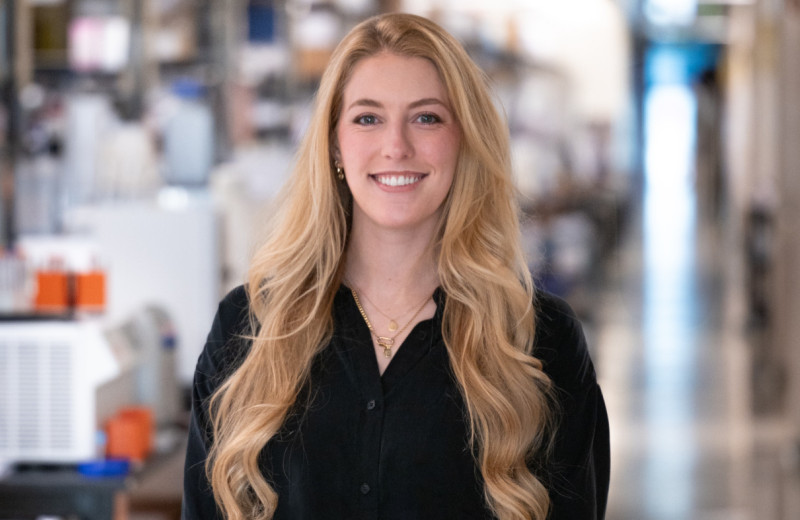
NOMIS–Gladstone Fellow Cathrine Sant is studying an enigmatic region of the human genome linked to neurodegenerative disease risk.
Neurological Disease NOMIS Graduate Students and Postdocs ProfileMeet Gladstone: Kevin Pastores
Article
June 23, 2026
Meet Gladstone: Kevin Pastores
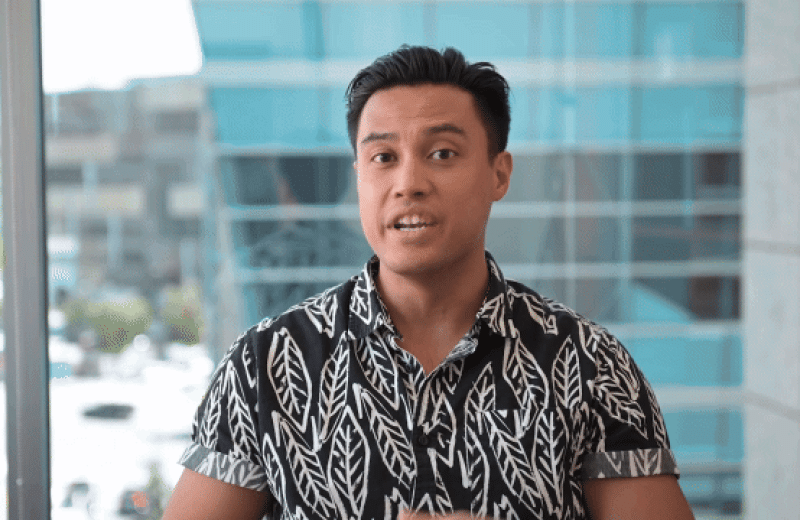
Kevin Pastores, assistant core director of Gladstone’s Flow Cytometry Core, helps researchers across disciplines design experiments, analyze complex cellular data, and harness emerging technologies like AI to accelerate discovery.
Profile Flow Cytometry Core