Welcome to Lab Notes Volume 4, Issue 4 |
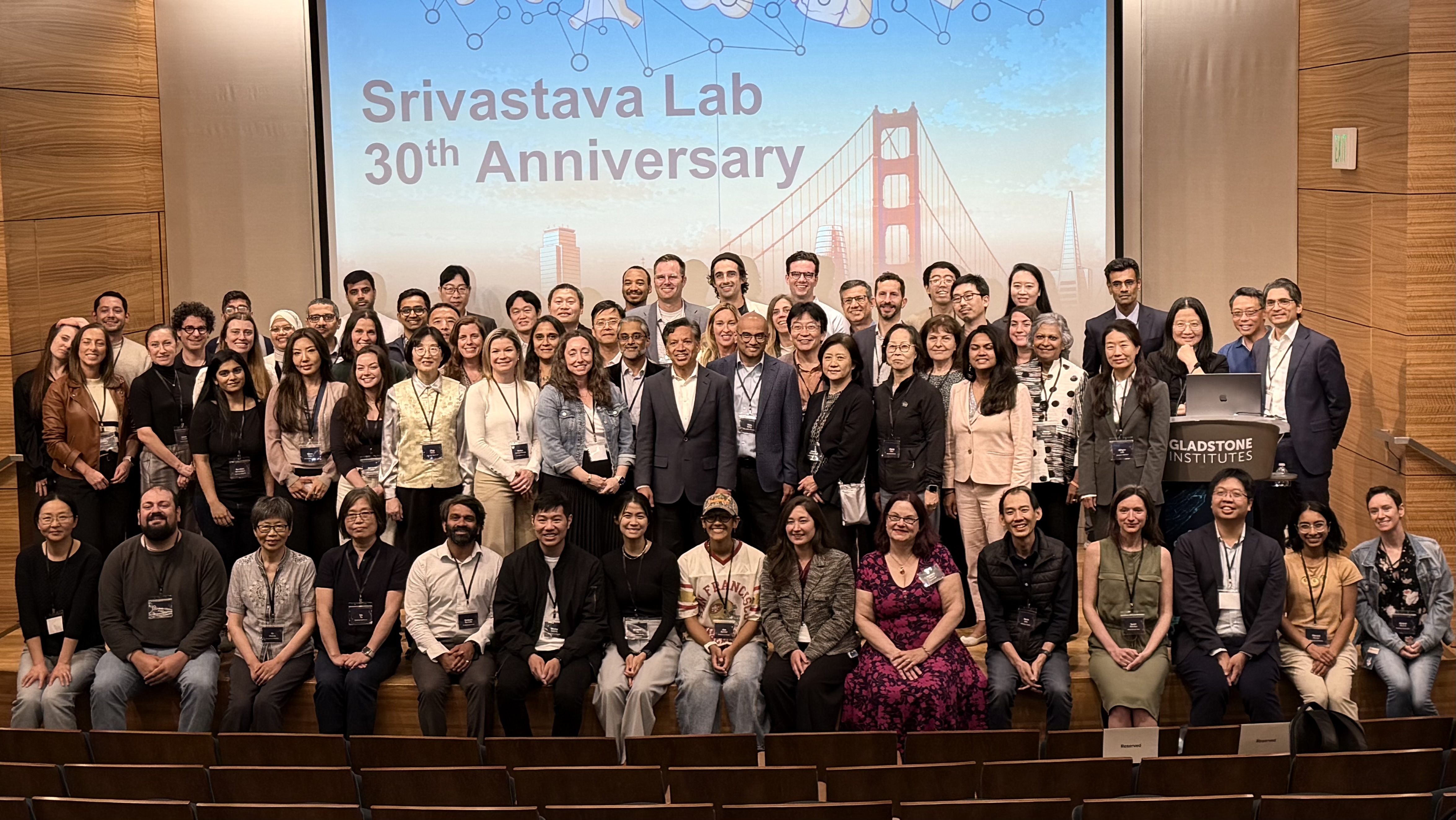
Last month was a special milestone: the thirtieth anniversary of my lab! To mark this occasion, we held a scientific symposium at Gladstone with discoveries shared by over 25 alumni supervising their own labs across the world, many leading centers and departments.
When I arrived in San Francisco over 20 years ago, the Human Genome Project was recently completed with only a small number of genomes decoded, CRISPR had not yet been discovered, personalized stem cells could not be made, and AI in biology was the stuff of science fiction.
Much has changed since then, but the thrill of discovery never gets old. Getting to work on these incredibly difficult problems with brilliant and generous colleagues (while finding time for fun along the way) has been such a privilege. That spirit is reflected in the stories I am sharing this month. I hope you enjoy reading about these advances and the remarkable scientists behind them, and I look forward to many more anniversary celebrations! With gratitude, |
President, Gladstone Institutes |
1 ] Thirty Years On, a Stem Cell Mystery Comes Into Focus |
Years before conducting the iPS research that would earn him the Nobel Prize, Shinya Yamanaka helped discover a little-known protein called eIF4G2 as a postdoc at Gladstone. It was this discovery that drove him to study embryonic stem cells. Now, a new study from his lab published in Cell Stem Cell shows that eIF4G2 helps adult intestinal stem cells maintain their identity.
When the gene is lost in mice, intestinal stem cells enter a fetal-like “repair mode.” Some become stuck there and can no longer mature into the specialized cells needed for healthy tissue function. The findings offer new insights into how tissues repair themselves and could one day help researchers develop better regenerative therapies.
Read more >
See more > |
2 ] AI Is Reshaping Our Understanding of DNA |
Scientists in Vijay Ramani’s lab developed a new AI-powered computational method called IDLI to better understand how DNA is organized inside cells. Using IDLI, they made a surprising discovery. For decades, researchers believed that when DNA is tightly wrapped around protein “spools” called nucleosomes, it is essentially locked away and inactive. But the new study found that most DNA remains partially accessible. This gives cells a much more flexible way to control genes, more like a dimmer switch than a simple on/off button. The discovery, published in Nature, changes how scientists understand gene regulation and could help explain complex diseases like cancer, Alzheimer’s, and aging, where many small changes in gene activity happen over time.
Read more > See more > |
3 ] A New Toolkit for Better Antibiotics and Beyond |
Seth Shipman and his team expanded a powerful technology for editing the DNA of many different bacteria, not just E. coli, the most common laboratory bacteria. Their “universal toolkit” works across different bacterial species from around the world. Published in Nature Biotechnology, this advance could help scientists more quickly study infectious diseases, engineer bacteria to make medicines or sustainable materials, and develop new ways to fight drug-resistant infections.
Read more >
See more > |
4 ] How a Small Group of People Could Change HIV Treatment |
Researchers in Nadia Roan’s lab identified common immune and genetic factors in rare individuals who keep HIV suppressed after stopping therapy – the vast majority develop florid AIDS if therapy is discontinued, even after decades. They discovered that metformin, a common diabetes drug, may help silence the virus. The findings, published in Immunity, could pave the way to long-term HIV remission without daily treatment.
Read more >
See more > |
If you enjoyed this email, forward it to a friend, and if you're seeing this for the first time, subscribe to get monthly updates on Gladstone's discoveries. |
|
|
|