Machine Learning Reveals Behaviors Linked with Early Alzheimer’s, Points to New Treatments
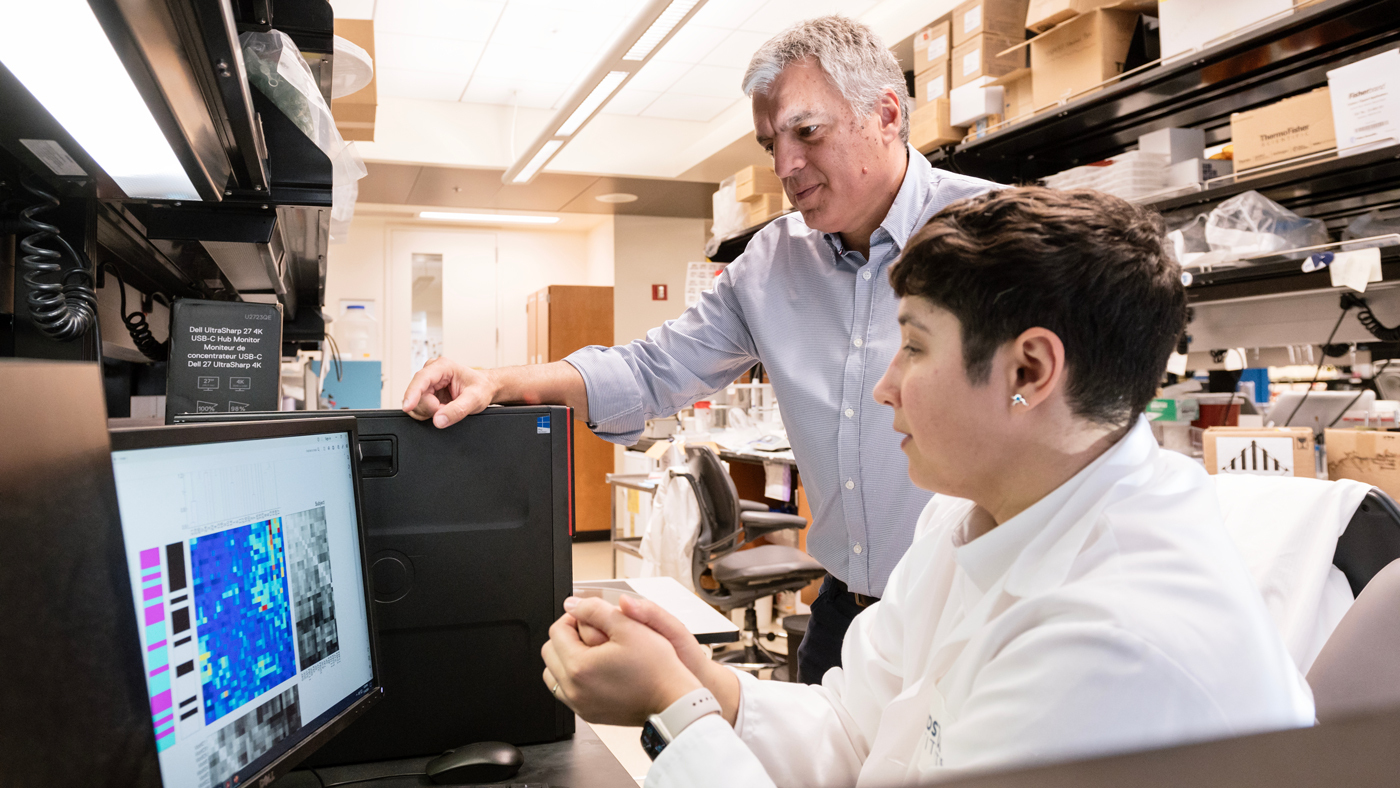
Subtle signs of Alzheimer’s disease can emerge decades before a diagnosis—often in the form of irregular behaviors that reflect very early stages of brain dysfunction.
But until now, identifying and measuring these slight behavioral changes in a scientific way hasn’t been feasible, not even when studying Alzheimer’s in mice.
In a study published in Cell Reports, a team of scientists at Gladstone Institutes used a new video-based machine learning tool to pinpoint otherwise-undetectable signs of early disease in mice that were engineered to mimic key aspects of Alzheimer’s.
Their work sheds light on a new strategy for identifying neurological disease earlier than currently possible and tracking how it develops over time.
“We’ve shown the potential of machine learning to revolutionize how we analyze behaviors indicative of early abnormalities in brain function,” says Gladstone investigator Jorge Palop, PhD, senior author of the study. “We’ve leveraged a valuable tool that opens the door to a more complete understanding of devastating brain disorders and how they begin.”
The scientists used a machine learning platform called VAME, short for “Variational Animal Motion Embedding,” to analyze video footage of mice exploring an open arena. The open-source tool identified subtle behavioral patterns captured on camera—changes that might not be noticed by simply looking at the mice.
Tracking Disorganized Behavior
VAME’s deep learning platform is unlike conventional behavioral tests in mice, which often center around preconceived tasks that the animals are challenged to complete.
Among the limitations of those tests, they can’t capture the full range of spontaneous behavioral changes caused by disease—particularly in early stages, explains Stephanie Miller, PhD, staff scientist at Gladstone and first author of the study. They also lack scalability and often rely on labor-intensive methods.
For the Gladstone study using VAME, the team evaluated two types of mice that simulated different aspects of Alzheimer’s. In both mouse models, the machine learning tool identified a significantly increased level of “disorganized behavior” as the mice aged. For example, the mice exhibited unusual patterns of behavior and transitioned more often between different activities—factors that might be associated with memory and attention deficits.
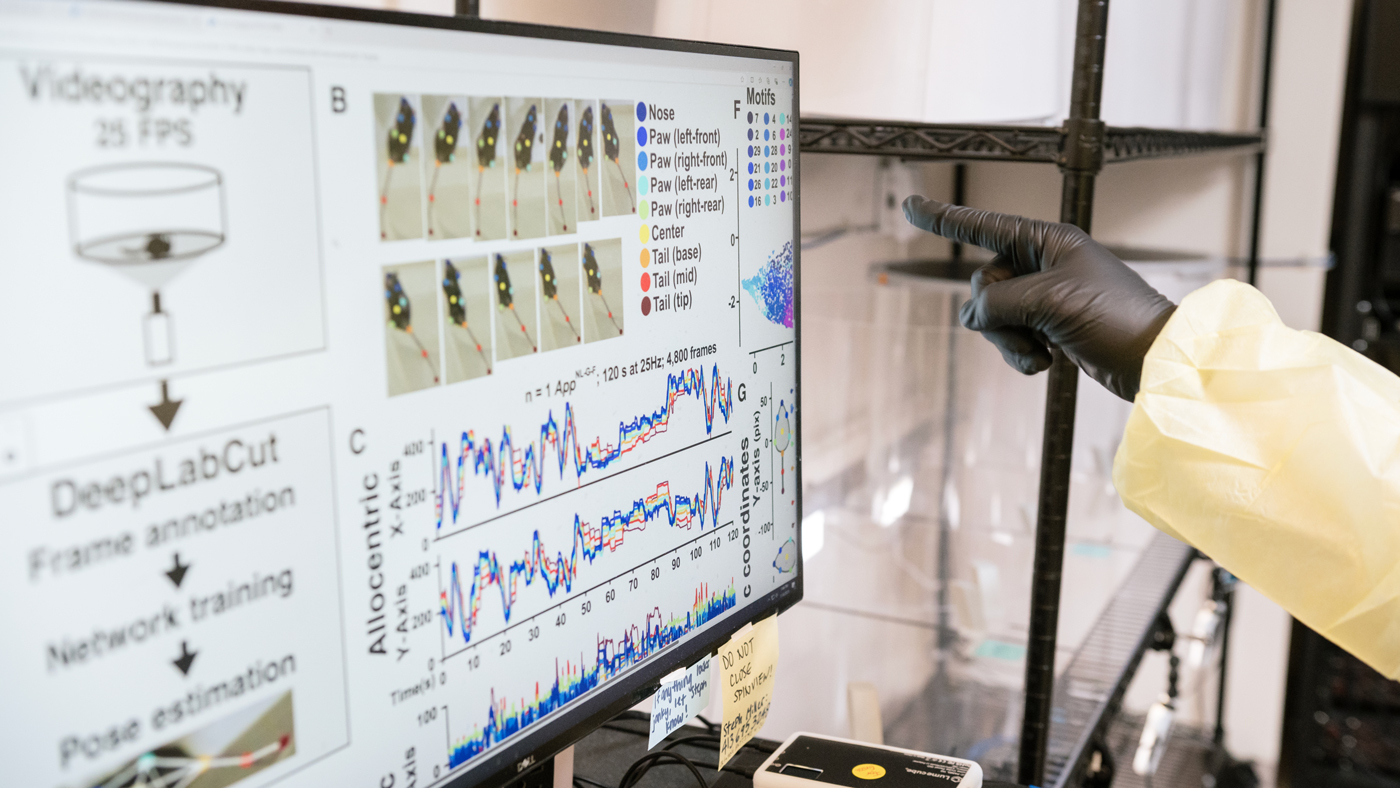
“Similar machine learning approaches could be used one day to study spontaneous behaviors in humans, potentially providing early diagnosis of neurological diseases,” Miller says, noting that smartphone-quality video is sufficient for VAME analysis. “I envision this technology will be used to assess patients in the clinic and even in their homes. It gives scientists and doctors a way to solve the very hard problem of diagnosing preclinical stages of disease.”
Miller began experimenting with VAME several years ago when the technology was still in its infancy. She and Palop collaborated with the team of Stefan Remy, MD, in Germany, which initially developed the platform. Together, they helped demonstrate VAME’s utility for neuroscience research in a study published in Communications Biology.
Evaluating a Potential Treatment
Adding another dimension to their new study, the Gladstone team used VAME to learn whether a potential therapeutic intervention for Alzheimer’s would prevent the disorganized behavior in mice.
The scientists leveraged prior research from Gladstone investigator Katerina Akassoglou, PhD, who discovered that a blood-clotting protein called fibrin creates a cascade of toxic effects when it leaks into the brain through damaged blood vessels. By blocking fibrin’s toxic effects, Akassoglou’s lab has been able to prevent the neurodegeneration that leads to cognitive decline and to protect against Alzheimer’s in animals.
“We’ve leveraged a valuable tool that opens the door to a more complete understanding of devastating brain disorders and how they begin.”
To find out if this therapeutic strategy could safeguard mice from Alzheimer’s-linked behaviors, the team genetically blocked fibrin from triggering toxic inflammation in the brain. The intervention worked, reducing the development of abnormal behaviors.
“It was highly encouraging to see that blocking fibrin’s inflammatory activity in the brain reduced virtually all of the spontaneous behavioral changes in Alzheimer’s mice, reaffirming that fibrin and the ensuing neuroinflammation are key drivers of the disease,” says Akassoglou, also an author of the study. “Machine learning can offer an unbiased way to evaluate potential treatments in the lab—and I believe it may ultimately become an invaluable clinical tool, as well.”
Palop and Miller are now working with other Gladstone teams who study neurological disease to help them employ the VAME technology for new behavioral studies.
“My goal is to make this tool and similar approaches more accessible to biologists and clinicians in order to shorten the time it takes to develop powerful new medicines,” Miller says.
Up Next

Turning the Tide on Tau: Q&A With Gladstone’s Lennart Mucke
Nearly 20 years after his landmark study uncovered novel roles of tau in Alzheimer’s disease, Gladstone's Lennart Mucke shares his perspective on new clinical data that could transform the future of brain health.
Christina Theodoris Honored in Inaugural Cohort of Young American Scientists
Scientific American recognizes Theodoris for her pioneering work developing artificial intelligence models to find treatments for an array of diseases.

How an AI Microscope Is Learning to Do Science
Gladstone scientists have developed a thinking microscope that can conduct its own experiments, with the ultimate goal of treating neurodegenerative diseases.
Gladstone Launches Center for PhAIge Therapy to Harness AI in the Fight Against Drug-Resistant Infections
The center, funded by an NIH grant, will become one of three national centers dedicated to accelerating the development of phage therapy.

Get Involved
Join the Team
Our people are our most important asset. We offer a wide array of career opportunities both in our administrative offices and in our labs.
Open PositionsPartner With Us
Discoveries don’t stay in our labs. Gladstone facilitates spinout companies to advance promising therapies, shortening the path between scientific discovery and helping real patients.
Learn MoreGive
Your gift to Gladstone will allow our researchers to pursue high-quality science, focus on disease, and train the next generation of scientific thought leaders.
Donate Now